Outer Banks septic guide
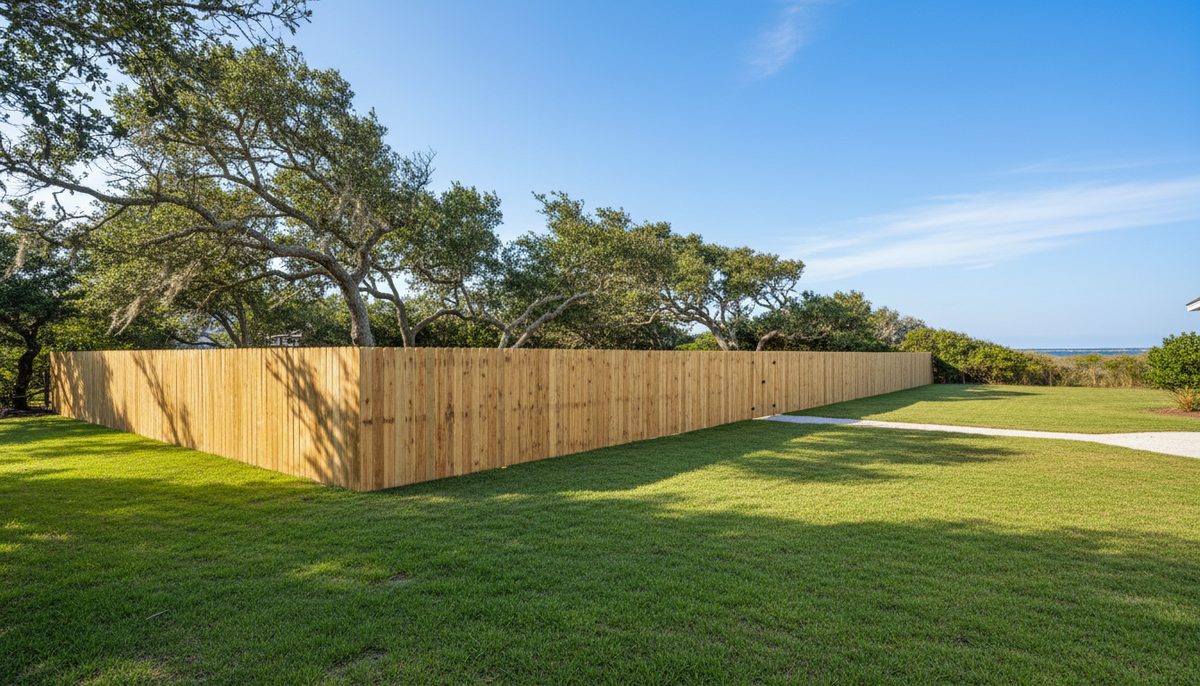
How to install a sand fence that builds a dune
The coastal rules wrote the install manual: 5-foot slat fencing, 10-foot sections with 7-foot gaps, off the wet sand and behind the vegetation line. How a dune-building fence goes in.
The unusual thing about sand fencing on this coast is that the install manual already exists — the state's coastal rules specify the height, the slats, the section lengths, the gaps, and the placement, and a fence built to those numbers is both a better dune builder and a permit-exempt one. This page is that manual in working order, section by section, from purpose to post.
The details
Start with what the fence is for, because every measurement downstream serves it. 15A NCAC 07H .0311 — sand fencing purpose-limited — sand fencing exists to trap windblown sand and build dunes, or to shield the dunes and their vegetation. A sand fence works by being mostly holes: wind carries sand, the slats slow it, the sand drops on the lee side, and the dune accretes fence row by fence row. That is why the design is slats on twisted wire rather than solid panels — a solid fence redirects the wind over the top and keeps moving the sand somewhere else, while a slat fence drops it right where the dune is wanted.
The build specification, which is the rule text in working clothes. sand fence ≤ 5 feet, 1–1.5 inch slats — evenly spaced wooden vertical slats roughly one to one and a half inches wide, connected with twisted wire, standing no more than five feet tall, carried on posts no larger than the stated dimensions. The five-foot ceiling and the skinny slats are the whole trick: enough surface to slow the wind, enough gap to keep the sand in transit until it lands on your dune.
The layout specification. 10-foot sections, 7-foot gaps — individual sections no longer than ten feet, spaced no less than seven feet apart, with the whole works kept out of the wet sand beach area and no more than ten feet waterward of the first line of stable natural vegetation, the frontal dune's toe, or the erosion escarpment, whichever is most waterward. The seven-foot gaps are load-bearing, so to speak: they keep the fence from becoming a wall the storm can peel, and the ten-foot waterward ceiling keeps the structure out of the active surf zone where it becomes debris instead of a dune.
Placement decisions that the rules leave to the site. A dune-building run is laid out to work with the prevailing wind rather than against it — long runs roughly parallel to the shore catch the most transport, and short returning arms can steer sand toward a blowout that needs filling. The fence line should start behind vegetation where the sand is already beginning to gather, because the fence accelerates a process the site has to be able to sustain; bare flat beach below the escarpment is not a dune nursery yet, and the rules' waterward limits say so in numbers.
And the two obligations that come after the last post is tamped. The fence must never be installed in a manner that impedes, traps, or endangers sea turtles, nests, or hatchlings — and it must come down, section by section, when it stops functioning: damaged and unsecured fencing is the owner's to remove on discovery. A maintained sand fence builds a dune for free, year over year; an abandoned one is litter with a permit exemption attached. The dig rules apply to the installation day like anywhere else — notice 3 working days before digging covers the post holes even when the coastal review question has been answered by the rule-compliant design.
Five feet, ten-foot sections, seven-foot gaps, behind the vegetation line — build to the numbers and the fence is exempt, effective, and working the winter storms into a taller dune. We install to the rule because the rule is the specification.
On the record: sand fence ≤ 5 feet, 1–1.5 inch slats (15A N.C. Admin. Code 07K .0212(5) (Justia Regulations, retrieved 2026-09-17)) · 10-foot sections, 7-foot gaps (15A N.C. Admin. Code 07K .0212(6) (Justia Regulations, retrieved 2026-09-17)) · 15A NCAC 07H .0311 — sand fencing purpose-limited (15A N.C. Admin. Code 07H .0311 — Installation and Maintenance of Sand Fencing (rule text at law.cornell.edu/LII; Authority G.S. 113A-107, 113A-113(b)(6); retrieved 2026-09-17))
Hand-verified 2026-09-17 against the primary sources named above; where a fact could not be verified it was left out, never guessed.