Outer Banks septic guide
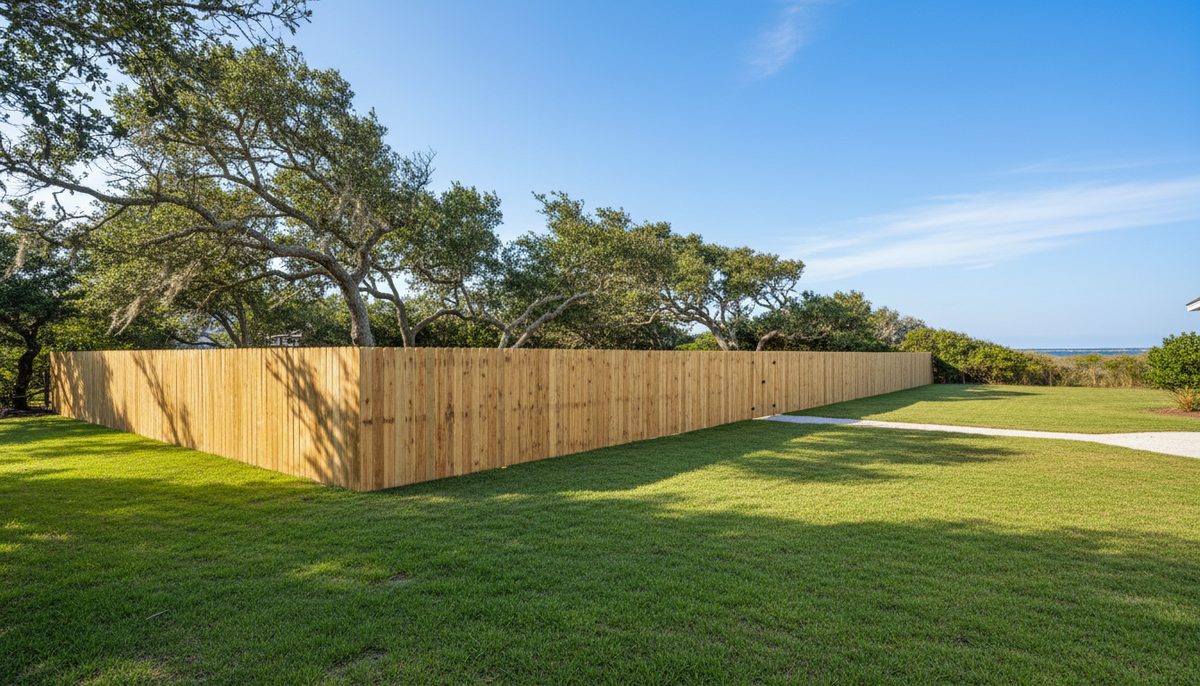
Can you build your own fence in Dare County?
Yes — G.S. 87-1(b)(2) exempts owners building on their own land for their own occupancy. What the exemption covers, the 12-month occupancy condition, and what it never covers.
Yes — the statute that requires general contractors at forty thousand dollars also carves out the owner building on their own land, and that carve-out is real. But it is written with conditions, and the conditions have a clock in them. This page is the owner exemption in plain terms: what it permits, what it presumes, and the three questions to settle before you buy the first post.
The details
The exemption itself. G.S. 87-1(b)(2) owner exemption — a person who constructs or alters a building on land they own is exempt from general-contractor licensure provided the building is intended solely for occupancy by that person and their family. Read the middle clause again, because it is the whole exemption: own the land, build for your own occupancy. The legislature was not licensing hobbyists improving their own homes, and the statute says so.
Now the clock. The same provision continues: if the building is not occupied as intended for at least twelve months following completion, it is presumed the exemption never validly applied. That presumption is drafted for a specific behavior — the owner who builds 'for himself' and lists the property for weekly rental the following June — and it reaches backward through the whole project. On a beach where half the housing stock is vacation rental, this is not a theoretical clause; the twelve-month test is the difference between a lawful owner-build and a licensing violation with a head start.
What the exemption never covers, and this is where do-it-yourself fence plans most often go wrong: it exempts the owner from hiring a general contractor, not from any other rule on this page. each contractor must hold a valid NC license — the county still requires each respective contractor and subcontractor who performs work on the project to hold a valid State of North Carolina license for the particular task. Hire out the gate automation, the masonry columns, anything a trade owns, and that trade's license is required exactly as if a general contractor had hired them. The exemption travels with the owner, not with the property.
And it exempts nothing that is not licensure. The post holes still owe the locate notice — notice 3 working days before digging applies to the owner swinging the auger the same as to any crew. A waterfront lot still raises the CAMA question, the town or county desk still owns the permit, and the zoning district still says where the fence may stand. An owner-builder is not a jurisdiction of one; he is a builder wearing every hat at once, including the ones he did not know existed.
The honest counsel, from the building side of the table: build your own fence if the work is within you and the occupancy condition is true, and hire out the parts that need licenses. What the phone calls cost is nothing against what a misapplied exemption costs — and if the plan is a rental property from the start, the exemption was never yours to use.
Own the land, live in the result, and the exemption is yours — call us if you want the hard parts done right. Anything else, call us anyway, because the rules that follow you do not follow the exemption.
On the record: G.S. 87-1(b)(2) owner exemption (N.C. General Statutes § 87-1(b)(2) (ncleg.gov, retrieved 2026-09-17)) · each contractor must hold a valid NC license (Dare County, NC — Building Permits & Inspections (darenc.gov, retrieved 2026-09-17)) · notice 3 working days before digging (N.C. General Statutes § 87-122 — Excavator responsibilities (ncleg.gov, retrieved 2026-09-17))
Hand-verified 2026-09-17 against the primary sources named above; where a fact could not be verified it was left out, never guessed.