Outer Banks septic guide
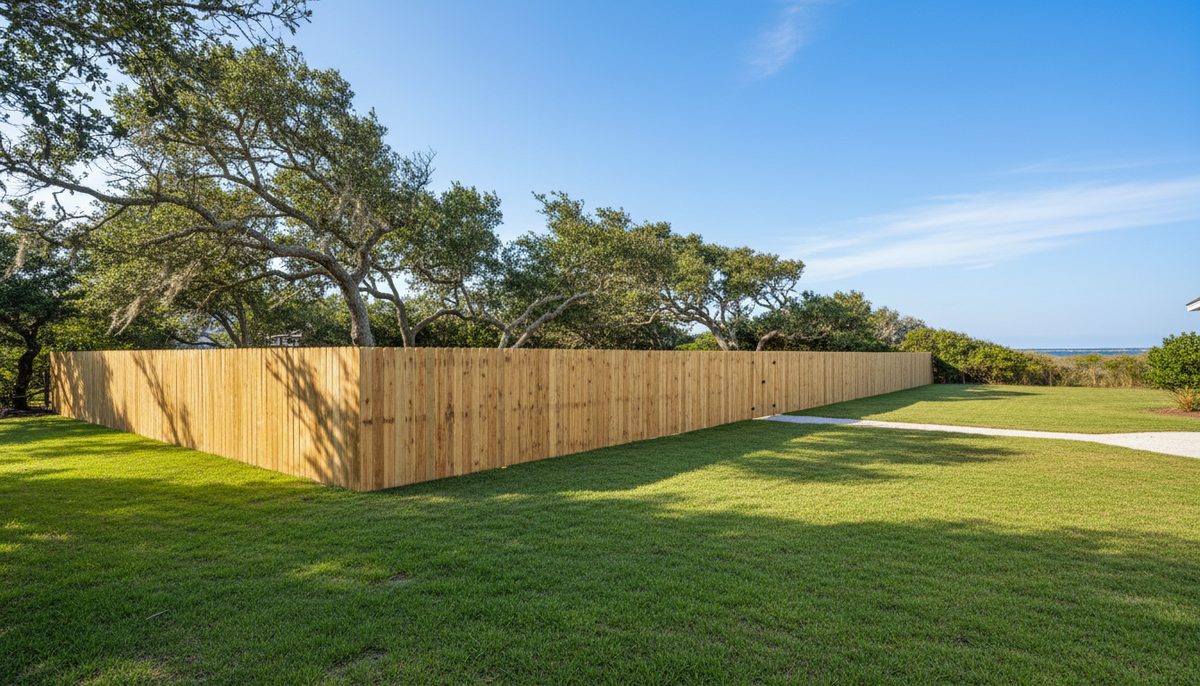
How close to a marked utility can you set fence posts?
North Carolina's tolerance zone: 24 inches on either side of a marked facility, where mechanized digging stops and hand exposure begins. What the rule is and how to work inside it.
The measured answer is a statutory one: 24 inches on either side of the marked line, plus half the known facility diameter, is the tolerance zone — and inside it, the auger stays on the truck. Fence work meets this rule constantly, because a property line and a utility easement are often the same few feet of ground. Here is what the zone is, why it exists, and how a fence actually gets built inside one.
The details
The definition, precisely. tolerance zone = 24 inches each side — the horizontal distance of one-half the known facility diameter plus 24 inches on either side of the designated center line, or 24 inches from the outside edge of the mark where the diameter is unknown. So the painted line on the sand is not the boundary; the boundary is two feet out from it, further if the operator's records say the line is fat. Fence crews work to the paint plus the zone, never to the paint itself.
The rule inside the zone: no mechanized equipment until the facility is visually identified by hand. That sentence is the entire safety logic of the dig law compressed — paint marks are the operator's best estimate of horizontal location, but the depth is a variable nobody promised you, and an auger that meets a gas service or a fiber line does not get a second chance. Hand-digging to expose the facility turns an estimate into a fact, and only then does the statute allow machinery near it.
What this means for post spacing, concretely. A fence run that shares ground with a marked utility usually has a small number of posts that fall inside the zone — the rest of the run is ordinary auger work under the notice you already filed. Inside the zone each hole is opened with a shovel and a hand auger, the facility is found and exposed, the post is set on the safe side of it, and the concrete goes around the post without touching the line. It adds maybe an hour to a day; it has never once been the wrong hour.
Two things crews also owe the zone. The first is the mark itself: the operators paint under their own clock — operators mark within 3 working days gives them three full working days to mark the horizontal location in the APWA color code and give positive response to the Center — so the schedule that respects the notice window is the schedule that finds fresh, legible paint. The second is the notice underneath it all: none of this marking exists until notice 3 working days before digging is filed, and the tolerance zone is only knowable if the marks are on the ground.
The honest summary for a property owner: you can set a fence post remarkably close to a utility — legally, safely, routinely — but the distance is measured by hand, verified by hand, and paid for with patience rather than luck. The crews that treat the two-foot rule as a suggestion are the crews that make the evening news; the ones that hand-dig the zone finish the day with a fence and a functioning neighborhood.
Marks on the ground and posts to set near them? That portion of the run is hand work — expose, verify, then set. It is how we build every run that shares ground with a line, and it costs an hour, not an incident.
On the record: tolerance zone = 24 inches each side (G.S. 87-117(22) — tolerance zone definition, NC811 statute text (nc811.org, retrieved 2026-09-17)) · operators mark within 3 working days (G.S. 87-121 — Facility operator responsibilities, in the NC811-published statute text (nc811.org, retrieved 2026-09-17)) · notice 3 working days before digging (N.C. General Statutes § 87-122 — Excavator responsibilities (ncleg.gov, retrieved 2026-09-17))
Hand-verified 2026-09-17 against the primary sources named above; where a fact could not be verified it was left out, never guessed.